After a weekend packed with activities, everyone enjoyed the
opportunity to sleep in thanks to the free morning. Our day started off in
the afternoon with several lectures from Dr. Dean Anderson and Dr. Will Allen
at Landcare Research in Lincoln. Dr.
Anderson’s lecture focused on mammal pests in New Zealand and the many issues
surrounding the management and control of the invasive species that threaten
native biodiversity.
The unique fauna of New Zealand evolved in the absence of mammals
for 65 million years and as a result, the arrival of people and subsequent
introduction of small predatory mammals have severely impacted the native flora
and fauna. Habitat loss and introduced
species have led to the extinction of 40% of native land birds and the listing
of over 600 taxa as under threat of extinction.
The mammalian pests in New Zealand create a “conservation paradox”
in which animals need to be killed in order to actually accomplish
conservation. For many endemic species
of birds, introduced predators like brush tail possums, stoats and hedgehogs
pose a serious threat to eggs and fledglings.
Studies have shown that increased exotic species population control
measures are correlated with increased native vegetation growth and increased
native species reproduction. Because
eradicating invasive species is so expensive, continued assessment to evaluate
program efficiency and ongoing research to develop more effective methods and
policies are vital to the overall mission of protecting the biological heritage
of New Zealand.
As a fun fact, we also learned that our fearless leader is related
to several native species thanks to his ancestor, Ferdinand von Hochstetter,
whose geological survey work in New Zealand led to a few species with his
namesake. The flightless Takahe (Porphyrio hochstetteri), carnivorous
Amber snail (Powelliphanta hochstetteri)
and Hochstetter’s frog (Leiopelma
hochstetteri) all share a common root with Dr. Hostetler!
Our next lecture from Dr. Will Allen was on managing program performance.
We learned about the importance of managing for specific outcomes, particularly
for initiatives geared toward improving sustainability and biodiversity.
The class split into small groups to create examples of using logic models to achieve specific outcomes.
After the lectures, we took a quick afternoon tea break at coffee
culture before our last stop of the day, which was a nearby green development
community in Lincoln. A local
subdivision designed with sustainability in mind featured permeable pavement
and swales to a retention pond surrounded by native vegetation like hebe, New
Zealand flax, lacebark, and toitoi. This
system of drainage allows rainfall to percolate without harming the environment by keeping heavy metals and other particulates out of the
groundwater.


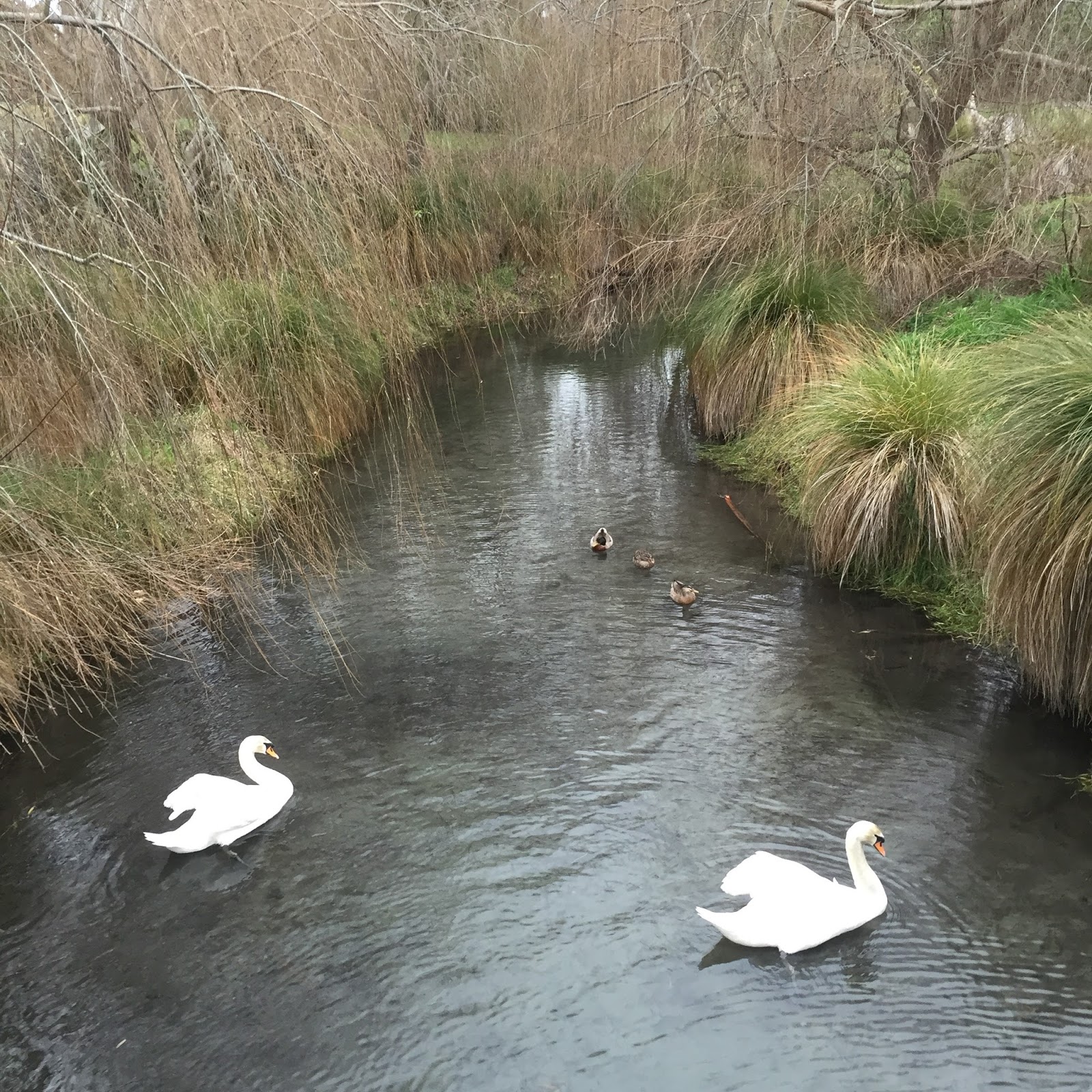
The protected Liffey Stream was also surrounded by native vegetation
and provided homes for several species of birds. We also learned the importance of eco-sourcing,
where replanted native vegetation is sourced from nearby locations in order to
maintain natural plant distributions and genetic diversity. At this location, we learned that the
undisturbed New Zealand flax was an indicator that the plants were likely
sourced from the North Island since insects were not using it as a food source.


Our day ended with a quick drive through the neighboring Ngai Tahu
development, which is a Maori development company. This part of the development also had rain
gardens, which are another method of collecting and filtering rainfall,
complete with native Kowhai trees and New Zealand flax. Both communities shared the green development
aspects of native vegetation in shared spaces with efforts to improve water
quality, more energy efficient homes with insulation and heat pumps (instead of
pollution emitting wood stoves), and informative signage.
-Mimi